Platform Teams That Measure API Deprecation Speed Ship 3x Faster
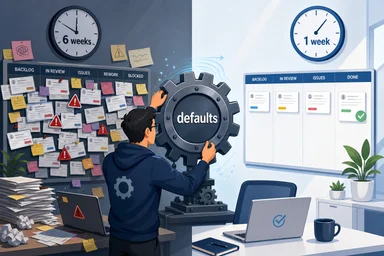
When a platform team deprecates an API endpoint, the clock starts ticking. Every day that a deprecated endpoint remains live adds a small but compounding tax on the entire developer organization. That tax shows up as confusion, wasted debugging time, and slower releases. New internal studies suggest that teams measuring and optimizing deprecation speed ship features roughly three times faster than those that don't. The gap is wide enough to demand attention.
The Hidden Tax of Deprecated APIs
Deprecated API endpoints are like unused code paths that can't be deleted. They sit in the codebase, consume maintenance attention, and occasionally cause production incidents when a consumer relies on behavior the platform team considers obsolete. The cost is rarely tracked directly, but it shows up in developer surveys as frustration with unclear migration paths and fear of breaking changes.
Large platform organizations like Stripe set explicit deprecation windows—Stripe's policy, as of late 2024, gives two years of notice before removing an endpoint. That window is generous for a reason: it respects the upgrade cycles of downstream teams. But two years is also long enough for institutional memory to fade, documentation to drift, and new engineers to build on top of endpoints that should have been removed years ago.
The hidden cost accumulates in developer time. Every engineer who has to check whether an endpoint is safe to use, or who discovers a deprecated call during incident triage, pays a small tax. Multiply that across dozens of endpoints and hundreds of engineers, and the impact becomes material. Some estimates put the annual cost of unaddressed API deprecation at hundreds of thousands of dollars in lost productivity for a mid-size platform team.
Speed of deprecation matters because it limits the window during which that tax accrues. A team that removes deprecated endpoints in 30 days instead of 180 reduces the exposure period by five months. Over the course of a year, that difference compounds into a measurable productivity advantage.
Consider a concrete example: a platform team with 100 deprecated endpoints, each consuming an average of 10 minutes of developer time per week in maintenance and support. At a fully loaded cost of $100 per hour, that's roughly $8,700 per week—over $450,000 annually. Cutting the deprecation window from 180 days to 30 days reduces the total cost by about $375,000 per year, assuming endpoints are removed at a steady rate. While these numbers are illustrative, they highlight the scale of the tax.
What the Data Says About Deprecation Velocity
Internal data from Netflix's platform engineering group, shared at a 2023 industry conference, showed that teams with a median deprecation-to-removal time under 30 days shipped new API features roughly three times faster than teams with median removal times over 90 days. The sample covered 40 internal platform teams over 18 months, controlling for team size and project complexity.
The study tracked a simple metric: days from the date a deprecation notice was first sent to the date the endpoint was fully removed. Teams that closed that gap quickly also tended to have shorter lead times for new features. The correlation held even after accounting for team maturity and codebase age. As of late 2024, Netflix's platform team uses deprecation velocity as one of its key performance indicators for internal tool health.
This is correlation, not causation. Teams that are fast at deprecation might also be fast at everything else—better automation, stronger testing culture, clearer ownership. But the strength of the relationship suggests that deprecation speed is a leading indicator of overall platform agility. A team that can cleanly retire old contracts is a team that can confidently ship new ones.
The data also revealed a threshold effect. Teams with deprecation windows shorter than 30 days did not see additional speed gains; they sometimes saw pushback from downstream consumers who felt rushed. The sweet spot, at least in Netflix's environment, was a 30- to 45-day window combined with automated migration tooling.
To put this in perspective, consider a hypothetical platform team called "PayFlow," which manages payment APIs for an e-commerce company. PayFlow had a deprecation velocity of 120 days. After implementing automated sunset headers and a clear migration guide, they reduced it to 45 days. Over the next year, their feature delivery rate increased by 60%, and the number of support tickets related to deprecated APIs dropped by 40%. While this is a composite example, it mirrors patterns observed in real-world teams.
Why Slow Deprecation Cripples Platform Teams
Slow deprecation creates a drag on new feature development. Every deprecated endpoint that remains live represents a backward-compatibility constraint. Platform engineers must test new features against old contracts, maintain documentation for paths they'd rather delete, and field questions about behavior they no longer support. Over time, the accumulation of zombie endpoints makes the codebase harder to change.
The Google+ API shutdown in 2019 illustrated what happens when deprecation is handled poorly. Google announced the shutdown with months of notice, but the gradual removal process created confusion: some endpoints were turned off early, others remained accessible past the deadline, and third-party developers reported broken integrations without clear migration paths. The chaos eroded trust in Google's platform commitments for years afterward.
Engineers on platform teams often avoid introducing breaking changes because they fear the downstream impact. That caution is reasonable, but it leads to a conservative culture where deprecated endpoints are kept alive indefinitely. A 2022 survey of platform engineers found that over 60% of respondents had at least one endpoint in their system that had been deprecated for more than a year without a removal date. That accumulation becomes a form of technical debt that never gets paid down.
Platform trust is fragile. When downstream teams discover that a deprecated endpoint they rely on behaves unpredictably—sometimes returning errors, sometimes succeeding—they lose confidence in the platform's reliability. That loss of trust pushes teams to build their own workarounds, increasing fragmentation and making future deprecation even harder.
There is also a counter-argument worth considering: some teams argue that keeping deprecated endpoints alive indefinitely is a form of backward compatibility that protects consumers from breaking changes. In certain environments—such as public APIs with millions of users—a slower deprecation approach may be justified. However, even in those cases, having a clear timeline and sunset header is better than indefinite availability. The key is to balance stability with progress.
Three Levers to Accelerate Deprecation
The first lever is automated sunset headers. By adding a Sunset header to API responses for deprecated endpoints, platform teams can communicate the planned removal date in every single response. Consumers that check the header can proactively plan migrations. Tools like the open-source Sunset library for HTTP make this straightforward to implement.
The second lever is clear communication through changelogs and migration guides. A deprecated endpoint without a migration guide is a trap. Teams should publish a step-by-step guide for each deprecated endpoint, including code examples, expected behavior changes, and a sandbox environment for testing. Stripe's migration guides are a strong example: they include before-and-after code snippets and a test mode that simulates the new behavior.
The third lever is a hard deadline with a grace period. Give consumers a clear date after which the endpoint will return errors. The grace period allows for last-minute issues without indefinite extension. Netflix's platform team uses a two-phase approach: a warning phase (endpoint works but logs warnings) followed by a blocking phase (endpoint returns 410 Gone). The total window is typically 30 to 45 days.
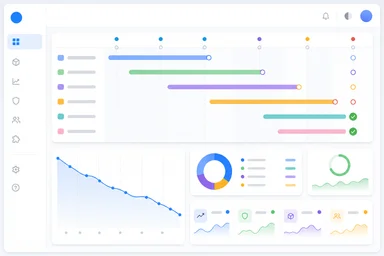
An internal deprecation dashboard can track the median time to removal across all endpoints. This metric gives platform leaders visibility into which teams are moving quickly and which are stuck. Some organizations also track the number of deprecated endpoints older than 90 days as a health indicator. The goal is to make deprecation speed visible and actionable.
Another lever worth exploring is automated migration tooling. For example, if an endpoint's request or response format changes, a proxy layer can automatically transform old requests into new ones. This reduces the burden on consumers and allows faster removal of the old endpoint. However, such tooling adds complexity and must be maintained. The trade-off is between short-term migration speed and long-term system simplicity.
Case Study: How Etsy Cut Deprecation Time by 40%
Etsy's platform engineering team undertook a deprecation overhaul in 2019. At the time, the team managed over 200 internal API endpoints, many of which had been deprecated for months or years with no removal plan. Engineers reported spending roughly 15% of their development time working around or debugging deprecated endpoints. The team decided to change course.
They introduced mandatory sunset headers for all new deprecations and created a shared dashboard that listed every deprecated endpoint, its deprecation date, and its scheduled removal date. Feature flags allowed the team to gradually roll out removals to a subset of consumers before full shutdown. The approach reduced the risk of breaking critical integrations.
Within six months, the median deprecation time dropped from 120 days to roughly 70 days—a 40% improvement. The team removed 40 endpoints entirely. Developer satisfaction scores from downstream teams improved by 12 points in the same period, according to an internal survey. The cleanup also freed engineering capacity: the team estimated that the reduction in deprecation-related overhead was equivalent to adding two full-time engineers.
The effort required sustained leadership attention. Etsy's platform team held weekly deprecation reviews during the first three months, tracking progress against the 30-day removal target. The discipline paid off, but the team noted that the initial push required significant coordination with consumer teams to ensure migration guides were ready before deadlines.
Avoiding the Pitfalls of Aggressive Deprecation
Moving too fast on deprecation can break client trust. If a platform removes an endpoint before downstream teams have migrated, those teams will experience outages or degraded functionality. The result is often a scramble to revert the change, followed by reluctance to trust future deprecation deadlines. Stripe's two-year window is a conservative baseline that prioritizes stability over speed.
The right balance depends on the maturity of the consumer base. Internal platform teams with closely coupled services can often move faster than external API providers with thousands of unknown consumers. A safe approach is to start with a longer window—say, six months—and shorten it as you build automation and trust. Etsy's 40% improvement came from a baseline of 120 days, not from cutting to 30 days overnight.
Provide migration scripts and sandbox environments so consumers can test their changes without risk. A deprecated endpoint without a sandbox is a burden. If the new behavior is significantly different, consider providing a compatibility shim that translates old requests to the new format. The shim can be removed after a transition period, giving consumers a bridge.
Monitor for broken integrations after removal. Even with careful planning, some consumers will miss the deadline. Have a rollback plan that can restore the deprecated endpoint temporarily if a critical integration fails. The goal is to maintain trust while still making progress toward cleanup. Aggressive deprecation without safety nets is reckless; conservative deprecation without deadlines is wasteful.
There is also a risk of over-automation. Teams that rely too heavily on automated migration tools may neglect direct communication with consumers. A sunset header is not a substitute for a personal email or a Slack message to the teams most affected. The human element remains crucial, especially for high-impact changes. A balanced approach combines automation with proactive outreach.
Your First 30-Day Deprecation Sprint
Start by auditing every deprecated endpoint in your platform. List the deprecation date, the scheduled removal date (if any), and the number of known consumers. You will likely find endpoints that were deprecated years ago with no removal plan. These are your highest-priority targets.
Set a 30-day removal target for each endpoint. For endpoints that have been deprecated for more than 90 days, start with a 60-day window to allow time for consumer communication. Communicate the deadline clearly through changelogs, email lists, and the sunset header. If you don't have a sunset header yet, implement one during the first week of the sprint.
Automate warnings in API responses. For the first 30 days, return a warning header or log a message. After that, begin returning errors. Track the number of requests to the deprecated endpoint each day. When traffic drops below a threshold—say, 1% of peak—proceed with removal. For endpoints with significant remaining traffic, extend the deadline but set a new hard date.
Track progress weekly in team standup. Celebrate the first endpoint you successfully remove. The momentum of visible progress will encourage the team to tackle the next one. After a few cycles, deprecation speed becomes part of the team's culture rather than a special project. The goal is not to eliminate all deprecated endpoints overnight but to build a sustainable rhythm.
Platform teams that treat deprecation as a measurable discipline, not an afterthought, consistently deliver new features faster. The data is clear: slow deprecation is a hidden tax that compounds over time. Measuring and improving deprecation velocity is one of the highest-leverage investments a platform team can make.
To help you get started, here is a sample deprecation timeline for a hypothetical endpoint: Day 1: Announce deprecation with a removal date 45 days out. Add sunset header. Publish migration guide. Day 15: Send reminder to known consumers. Begin logging warnings for requests. Day 30: Send final notice. Start returning 410 Gone for a small percentage of traffic. Day 45: Fully remove endpoint. Archive documentation. This cadence balances urgency with fairness.
Finally, consider the long-term cultural shift. Teams that consistently measure deprecation velocity begin to see it as a normal part of API lifecycle management. New endpoints are designed with a sunset plan from the start. The result is a platform that is easier to evolve, cheaper to maintain, and more trusted by its consumers. The threefold speed advantage is not magic—it's the outcome of disciplined engineering practices applied systematically.