Indian Beedi Rollers Develop Chronic Cough as Tobacco Dust Blocks Small Airways
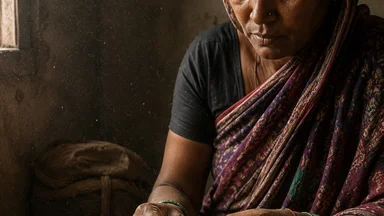
Every morning, tens of thousands of women in the villages of West Bengal sit down on the floor with a pile of dried tendu leaves and a bowl of tobacco. Their fingers move quickly, rolling and tying, and by evening each woman has produced 500 or 600 beedis. The pay is meagre — roughly US$ 3 to 5 for a day’s work — but the lungs pay a higher price. Fine tobacco dust, particles smaller than 5 micrometres, fills the air around them. With every breath, these particles travel deep into the lungs, lodging in the terminal bronchioles. Over months and years, the dust triggers a cycle of inflammation and scarring that narrows the small airways. The result is a chronic cough that many women dismiss as a seasonal ailment, but which is actually an occupational lung disease with no cure.
A Single Beedi Deposits 50–60 mg of Tobacco Dust into the Roller’s Lungs
Beedi rolling is a cottage industry in India, employing an estimated 4 to 6 million people, the vast majority of them women. The work is done indoors, often in poorly ventilated rooms. As the roller handles the tobacco, fine dust particles are released into the air. Studies have measured the dust concentration in rolling rooms at 2 to 5 mg per cubic metre, but without exhaust fans, the levels can be higher. Each beedi may release 50 to 60 mg of dust during rolling, and with half a thousand beedis per day, the cumulative exposure is substantial.
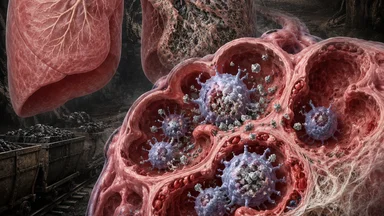
The particles between 2 and 5 micrometres in diameter are particularly dangerous because they are small enough to bypass the mucociliary escalator of the larger airways and reach the respiratory bronchioles and alveoli. Once there, they are engulfed by alveolar macrophages. The macrophages release cytokines — tumour necrosis factor-alpha, interleukin-8 — that recruit neutrophils and other inflammatory cells. This is the body’s attempt to clear the dust, but when the exposure is repeated day after day, the inflammation becomes chronic.
Over time, repeated cycles of inflammation lead to fibrosis of the small airway walls. The bronchioles narrow, and the lungs lose their elasticity. This process is insidious. A woman may feel well for the first few years, then notice a mild cough that she attributes to the change of seasons or a cold that never quite resolves. By the time she seeks medical help, the damage may already be irreversible.
The dust also contains nicotine and other chemical compounds that may have direct toxic effects on the airway epithelium. While the health risks of smoking beedis are well known — beedi smoke contains higher levels of tar and nicotine than cigarette smoke — the risks of inhaling the raw tobacco dust during rolling are less publicised. Yet the dust exposure is continuous and long-term, often spanning decades.
Small Airways Obstruction Shows Up on Spirometry Before Symptoms Worsen
The hallmark of small airways disease is obstruction in the distal airways, which spirometry can detect before symptoms become severe. In the early stages, the FEV1/FVC ratio — the standard measure used to diagnose COPD — may remain normal. That is because the FVC is preserved when only the small airways are affected. The more sensitive indicator is the forced expiratory flow between 25% and 75% of vital capacity, or FEF25-75%. This parameter reflects flow in the small airways, and it declines early.
A study of 200 beedi rollers in West Bengal, published in the Indian Journal of Occupational Health in 2023, found that 34% had a low FEF25-75% despite normal FEV1/FVC ratios. The women were mostly in their 30s and 40s, and many had been rolling for more than 10 years. They reported cough and mild breathlessness on exertion, but few had sought medical attention. The study’s authors recommended routine spirometry screening for all beedi rollers, but such screening is rare in rural health centres.
In a primary care setting, the challenge is that FEF25-75% is not always reported or interpreted. Many spirometers in community health centres are used mainly to confirm asthma or COPD, and the operator may not look at the flow-volume loop in detail. Training health workers to recognise early small airways obstruction could shift the point of diagnosis by years.
The decline in FEF25-75% can be gradual, losing roughly 20 to 30 ml per year in exposed workers, compared to 10 to 15 ml in unexposed adults. When the decline reaches a threshold, symptoms emerge: first a chronic cough, then dyspnoea on climbing stairs or carrying water, and eventually breathlessness at rest. But by then, the small airways are already scarred.
Chest X-ray Often Looks Clear, Masking the Underlying Burden
A chest X-ray is often the first test ordered for a patient with chronic cough, but in small airways disease it is notoriously normal. Plain radiography cannot resolve the distal bronchioles; the airways are too small and the surrounding lung tissue too uniform. A woman with significant small airways obstruction may have a chest X-ray that is read as clear, leading the clinician to consider asthma, post-nasal drip, or gastro-oesophageal reflux before thinking of occupational dust exposure.
High-resolution computed tomography (HRCT) can show the damage: areas of mosaic attenuation, where some regions of the lung appear darker because of air trapping, and a pattern of centrilobular nodules. But HRCT costs roughly US$ 50 to 100 in rural India, a prohibitive sum for women earning a few dollars a day. Even if the test were free, the nearest CT scanner might be 50 kilometres away, requiring a day of lost wages and travel costs.
The diagnosis therefore rests on occupational history and spirometry. A careful history — asking about the type of work, the number of beedis rolled per day, the duration of exposure, and the presence of similar symptoms in co-workers — can point to the cause. Yet in busy primary care clinics, such a history is often abbreviated. The cough is treated with antibiotics or cough syrups, and the patient returns months later with the same complaint.
The World Health Organization estimates that 4 to 6 million beedi rollers work in India, mostly women in the states of West Bengal, Tamil Nadu, and Karnataka. Many are home-based workers, invisible to occupational health surveillance. Their lung disease is undercounted in national statistics, and the burden of chronic cough in these communities is likely far higher than reported.
Simple Interventions Cut Dust Exposure by Half in Pilot Programmes
In 2024, the government of West Bengal piloted a set of low-cost interventions in 10 villages with high concentrations of beedi rollers. The centrepiece was the wet rolling technique: instead of handling dry tobacco, the women moistened the leaves with water, which reduced airborne dust by an estimated 40 to 60%. The technique required no special equipment, only a spray bottle and a change in habit.
Another intervention was local exhaust ventilation — a small fan and duct system placed at the rolling table that captured dust at its source. The units cost roughly US$ 30 to 50 each, and 200 were distributed in the pilot villages. Women reported that the air smelled cleaner and that they coughed less after six months of use. Spirometry data from the pilot showed that the decline in FEF25-75% slowed in the intervention group compared to a control group.
Regular spirometry screening every 12 to 18 months was also introduced. Community health workers were trained to perform the test and to refer women with a low FEF25-75% for further evaluation. The programme reached about 1,500 women, but scaling it to the millions of rollers across India would require substantial investment. The cost of a portable spirometer is roughly US$ 500 to 1,000, and training health workers takes time.
The wet rolling technique has been adopted by some self-help groups, but adoption is uneven. Some women resist because moist tobacco can be harder to roll or may cause the beedis to dry unevenly. Others worry that the quality of the beedi will suffer, affecting their income. Still, the pilot demonstrated that simple changes can make a difference, and that the barriers are as much social as technical.
Treating Chronic Cough in Beedi Rollers Requires Anti-Inflammatory Strategies
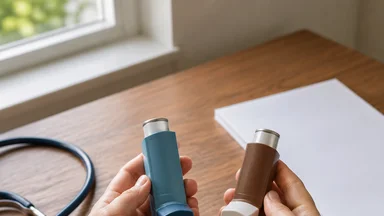
Once the cough is established, treatment focuses on reducing inflammation and relieving symptoms, but no therapy can reverse the fibrosis that has already occurred. Inhaled corticosteroids — beclomethasone, budesonide — can dampen the inflammatory response in the airways, but they cost US$ 10 to 20 per month, a significant expense for a woman earning US$ 3 per day. Bronchodilators such as salbutamol provide symptomatic relief by relaxing the smooth muscle of the airways, but they do not halt the underlying disease.
Oral N-acetylcysteine, a mucolytic agent, has been studied in COPD and may help thin the mucus that accumulates in the small airways. A 2022 meta-analysis in the Cochrane Database of Systematic Reviews found that N-acetylcysteine reduced exacerbation rates in COPD patients, but the evidence specific to beedi rollers is lacking. In primary care, clinicians often prescribe antibiotics empirically, assuming an infectious cause, but this is rarely appropriate for chronic cough due to dust exposure.
Smoking cessation is another critical component. Many beedi rollers also smoke beedis — a habit that compounds the dust exposure with inhaled smoke. The combination accelerates lung function decline. Smoking cessation services are sparse in rural India, and the nicotine addiction is strong. Nicotine replacement therapy is expensive and not widely available.
The most important step is for primary care clinicians to consider occupational dust as a root cause. A patient with chronic cough who works in beedi rolling should not be treated for bronchitis repeatedly without a spirometry test and an occupational history. The delay in diagnosis — often 3 to 5 years from first cough — means that by the time the patient is seen, the small airways are already scarred and narrowed. No cure exists; management focuses on slowing progression and improving quality of life.
Diagnostic Delay Means Irreversible Lung Damage by the Time Care Is Sought
The median delay from the onset of cough to a diagnosis of occupational lung disease in rural India is estimated at 3 to 5 years. During that time, the woman visits local clinics, receives cough syrups and antibiotics, and continues to roll beedis. The dust exposure continues, and the small airways become progressively scarred. By the time a referral is made to a chest physician, the FEV1 may have declined significantly, and the FEF25-75% may be severely reduced.
There is no cure for small airways fibrosis. Management strategies — inhaled corticosteroids, bronchodilators, pulmonary rehabilitation — can slow the decline but cannot reverse the damage. The only definitive intervention is to stop the exposure, but for many women, beedi rolling is the only source of income. They cannot afford to quit.
Public health campaigns should target beedi-rolling clusters with information about the risks and the availability of screening. Community health centres in these areas should have spirometers and trained staff. The pilot programme in West Bengal showed that early detection is feasible, but scaling it requires political will and funding. The cost of spirometry screening per person is roughly US$ 2 to 3, a fraction of the cost of treating advanced lung disease.
Economic Realities Trap Women in a Cycle of Exposure and Disease
The economic dimension of beedi rolling cannot be separated from the health consequences. For a woman in rural West Bengal, beedi rolling may be the only cash-earning opportunity within reach. Agriculture is seasonal and often pays less. Migrant labour requires leaving children behind. Rolling beedis at home allows her to care for her family while contributing to household income. The trade-off is her lungs.
Some women have tried to switch to other occupations, such as weaving or selling vegetables, but these alternatives are limited. A 2021 survey by the Self-Employed Women’s Association (SEWA) found that 80% of beedi rollers had no other employment options within their village. The few who attempted to quit rolling returned within months because they could not match the earnings from beedis. The piece-rate system — paying per 100 beedis — incentivises speed and long hours, increasing dust exposure.
Child labour is another concern. Children often help their mothers by sorting leaves or tying beedis, exposing them to the same dust. A 2019 study in the International Journal of Environmental Research and Public Health reported that children in beedi-rolling households had higher rates of cough and wheeze than children in non-rolling households, even if they did not directly handle tobacco. The dust settles on surfaces and is resuspended during cleaning, so the entire family breathes it.
Microfinance initiatives and skill-training programmes have been proposed as ways to diversify income, but they require upfront investment and time. A woman cannot afford to stop rolling for several weeks to attend a training course. The immediate need for food and school fees outweighs the long-term risk to her health. Until alternative livelihoods are available and accessible, the chronic cough will remain a fixture of beedi-rolling communities.
Comparing Beedi Dust to Other Occupational Lung Exposures
The pattern of small airways disease seen in beedi rollers is not unique. Similar pathology occurs in workers exposed to grain dust, cotton dust (byssinosis), coal dust, and silica. In each case, fine particles penetrate the distal airways and trigger inflammation and fibrosis. The difference is in the scale of the workforce and the lack of regulation.
In developed countries, occupational exposure limits for inhalable dust are typically around 5 mg per cubic metre averaged over an 8-hour shift. Many beedi-rolling rooms exceed that level, but enforcement is absent. The informal nature of the work — home-based, unregistered — places it outside the reach of labour inspectorates. Even if a limit were set, monitoring would be nearly impossible.
The comparison with cotton dust is instructive. In the 1970s, byssinosis was rampant among textile workers in India. After sustained advocacy and legal action, the government introduced dust control measures and medical surveillance in large mills. The prevalence of byssinosis declined. No similar movement has occurred for beedi rollers, partly because the industry is fragmented and partly because the disease is less dramatic — a chronic cough rather than acute breathlessness.
Another relevant comparison is with the use of nicotine pouches as a harm-reduction strategy. Some public health experts have proposed that beedi rollers could switch to rolling nicotine pouches instead of combustible beedis, reducing both dust and smoke exposure. However, nicotine pouches are not yet widely accepted in India, and the regulatory status is uncertain. The economic transition would also be disruptive. Nevertheless, the idea highlights the need for innovation in occupational health for informal workers.
The Role of Primary Care: A Call to Action
Primary care clinicians in beedi-rolling districts are the frontline for detecting this disease. A simple set of questions — “What work do you do? How many beedis do you roll per day? For how many years? Do you cough daily? Do your co-workers have the same problem?” — can raise suspicion. Spirometry, even with a portable device, can confirm small airways obstruction. The FEF25-75% should be examined, not just the FEV1/FVC ratio.
Referral pathways to chest physicians and occupational health specialists should be established. In the pilot programme, women with low FEF25-75% were given a referral card and a follow-up appointment. Compliance was around 60%, which is reasonable for a first attempt. With better counselling and transport subsidies, it could be higher.
Treatment, as discussed, is symptomatic and supportive. But even without a cure, early diagnosis allows women to make informed choices. Some may decide to reduce their work hours, improve ventilation, or switch to wet rolling. Others may seek alternative employment if it becomes available. Knowledge itself is an intervention.
Ultimately, the burden falls on the women themselves. They roll beedis to feed their families, unaware that the dust they inhale is slowly destroying their lungs. A chronic cough is not a seasonal nuisance — it is a signal of damage that, once done, cannot be undone. The challenge for the health system is to hear that signal early, and to act before the small airways close for good.
This article is for informational purposes only and does not constitute medical advice. Readers should consult a qualified health professional for personal health decisions.