Nigeria Public Health Insurance Reimburses Facility Births but Not Skilled Home Attendants
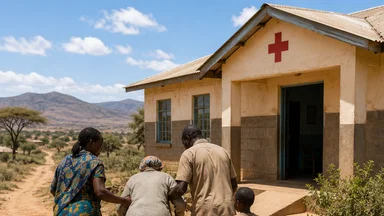
In rural Nigeria, a woman in labor may walk hours to reach a clinic, or she may deliver at home attended by a traditional birth attendant. The National Health Insurance Authority (NHIA) will reimburse the facility birth but not the skilled home attendant—even if that attendant is a trained midwife. This policy choice, embedded in the design of Nigeria's public health insurance, has real consequences for maternal and neonatal survival.
A Coverage Gap That Costs Lives
Nigeria's NHIA, established under the National Health Insurance Authority Act of 2022, aims to provide universal health coverage. Its basic benefit package covers facility-based delivery, including cesarean sections and postnatal care. But home births—which account for a large share of deliveries in rural areas—are excluded from reimbursement, even when attended by a skilled professional such as a nurse-midwife or community health extension worker.
This exclusion matters because roughly 60% of Nigeria's population lives in rural areas where health facilities are scarce. In states like Kebbi, Yobe, and Zamfara, facility delivery rates are below 20%, according to the 2018 Nigeria Demographic and Health Survey. Women often travel for hours on unpaved roads, paying transport costs that can exceed the delivery fee itself. For many, home birth is not a choice but a necessity.
The policy prioritizes institutional delivery, reflecting a global push to reduce maternal mortality by encouraging facility births. Yet the tension between safety and access is acute: a facility birth may be safer in theory, but if the facility is understaffed, ill-equipped, or unreachable, the home may be the safer option—especially with a skilled attendant.
Rural women face a double bind: they cannot afford the transport to a facility, and the insurance will not cover the skilled attendant who could come to them. The result is that many deliver alone or with an untrained relative, increasing the risk of hemorrhage, infection, and neonatal death.
Consider the case of Aisha, a 28-year-old mother of three in a village in Jigawa State. Her nearest primary health center is 15 kilometers away, and the only transport is a motorcycle taxi that charges roughly 2,000 naira—more than her family's weekly food budget. She had her first two children at home with her mother-in-law. For her third pregnancy, she saved for months to afford the transport, only to arrive at the facility to find the midwife absent. She delivered on the floor of the waiting room. Stories like Aisha's are common across northern Nigeria, where the NHIA's facility-only policy offers little practical help.
In contrast, a skilled home attendant could have come to her village, checked her progress, and managed the delivery safely. But because the NHIA does not reimburse home births, such attendants are scarce and often work informally, charging fees that families struggle to afford. The result is a system that penalizes the rural poor for their geography.
How the NHIA Benefit Package Works
The NHIA's basic benefit package, known as the Essential Healthcare Package, covers a defined set of services including antenatal care, facility delivery, and postnatal care. Home delivery is not listed as a reimbursable service. The package is designed to be uniform across states, but each state can supplement it through its own health insurance scheme. Some states have experimented with covering home births, but there is no national standard.
Skilled home attendants—such as nurse-midwives and community health extension workers—are not recognized as reimbursable providers under the NHIA. To be reimbursed, a provider must be a registered health facility or a licensed practitioner operating within a facility. This excludes practitioners who attend home births, even if they are fully trained and licensed.
The Association of Midwives of Nigeria has lobbied for policy change, arguing that excluding home attendants undermines efforts to reduce maternal mortality. In a 2023 position paper, the association noted that many of its members attend home births in rural areas and could provide safe care if reimbursed. But the NHIA has not revised its provider criteria.
State-level schemes vary: for example, the Lagos State Health Scheme covers home births under certain conditions, but similar provisions are rare in northern states where home birth is most common. This patchwork creates inequity: a woman in Lagos may have coverage for a home birth, while a woman in Yobe does not. The disparity is not just about geography; it reflects different political priorities and capacities. Lagos, with its urban wealth and stronger health infrastructure, can afford to experiment. Northern states, which bear the highest maternal mortality burdens, are left with the default NHIA package that excludes home birth.
Some critics argue that state-level variation is a feature, not a bug, of Nigeria's federal system. States are meant to tailor health insurance to local needs. But in practice, the poorest states have the least ability to supplement the package, so the national exclusion becomes a de facto ban on home birth reimbursement for those who need it most.
Evidence That Skilled Home Birth Is Safe
The World Health Organization recommends that every birth be attended by a skilled health professional, but it does not specify that the birth must occur in a facility. For low-risk pregnancies, home birth with a trained attendant can be as safe as facility birth, provided that referral systems are in place for emergencies. A 2020 Cochrane review found that planned home birth for low-risk women, with a trained midwife, had similar neonatal outcomes to hospital birth, with fewer interventions.
Nigeria's maternal mortality ratio is among the highest in the world, at roughly 512 deaths per 100,000 live births (WHO, 2020). The leading causes—hemorrhage, sepsis, hypertensive disorders—are often preventable with timely intervention. Skilled attendants can administer oxytocin to prevent hemorrhage, manage eclampsia with magnesium sulfate, and recognize danger signs early. The gap is not skill but access: many women deliver without any skilled attendant.
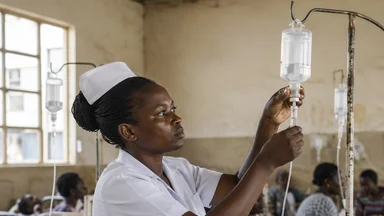
Facility births in Nigeria are not always higher quality. A 2022 study in the Lancet Global Health found that many primary health centers lack basic equipment, such as blood pressure cuffs and sterilized delivery kits, and that staff absenteeism is common. In such settings, a home birth with a well-equipped, trained attendant may offer comparable or better care.
Critics argue that home birth is inherently riskier because complications can arise suddenly. But the evidence suggests that with proper screening and a functioning referral system, the risks are manageable. The policy question is not whether home birth is safe, but how to make it safe—and whether insurance can support that.
A counter-argument worth considering is that any policy change that appears to endorse home birth might discourage women from seeking facility care when it is genuinely needed. For women with high-risk pregnancies—those with previous cesarean sections, multiple gestations, or conditions like preeclampsia—facility delivery is unequivocally safer. Proponents of the current policy worry that reimbursing home births could blur the distinction, leading to more home births among high-risk women. This is a valid concern, but it can be addressed through careful screening protocols. A skilled attendant can assess risk during antenatal care and refer high-risk women to facilities, while low-risk women can choose home birth with insurance coverage. The policy does not have to be all-or-nothing.
Another trade-off involves cost. Some health economists argue that reimbursing home births might increase overall spending if it leads to more births being attended by skilled professionals who were previously unpaid. However, the cost per home birth is typically lower than a facility birth because there are no overheads for building maintenance, utilities, or administrative staff. A rough estimate suggests that a home birth with a skilled attendant costs roughly half of a facility birth in Nigeria. If the policy reduces unnecessary facility transfers and cesarean sections, the net savings could be substantial.
Equity and Access in Rural States
In Kebbi State, where the facility delivery rate is around 12%, women often deliver in their compounds with the help of a traditional birth attendant. The nearest primary health center may be 20 kilometers away, and transport—where available—can cost 5,000 naira or more, roughly the same as the monthly premium for the state's health insurance scheme. For a family living on less than a dollar a day, that cost is prohibitive.
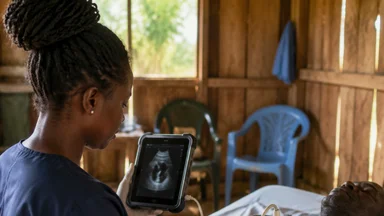
Skilled home attendants could bridge this gap. Community health extension workers, who are trained to manage normal deliveries and recognize complications, already work in many rural areas. They are employed by state governments but are not reimbursed for home deliveries under the NHIA. If they were, women could receive skilled care at home without the transport burden.
The NHIA rule entrenches an urban bias: it assumes that facilities are accessible and that women can reach them. In reality, the poorest women—those who need insurance most—are least able to use it. A 2021 analysis by the Nigerian Health Watch found that NHIA enrollment is highest in urban areas, while rural women are more likely to be uninsured and to deliver at home.
Reimbursing home attendants would not solve all problems: referral systems need strengthening, and attendants need supplies. But it would remove a financial barrier that currently pushes women toward unassisted birth.
To illustrate the equity dimension, consider two women: Funke in Lagos and Hauwa in Yobe. Funke lives near a private hospital, has a steady income, and can afford the NHIA premium. She delivers in the hospital and gets reimbursed. Hauwa lives in a village with no clinic, earns irregular income from farming, and cannot afford transport to the nearest facility. She delivers at home with no skilled attendant. The NHIA policy effectively subsidizes Funke's safe delivery while offering nothing to Hauwa. This is regressive: public insurance that benefits the urban middle class while excluding the rural poor.
Some might argue that the NHIA is still young and that expanding coverage to home births would overstretch its capacity. But the NHIA already reimburses facility births in rural areas, many of which are poorly equipped. Redirecting some of those funds to home birth reimbursement could improve outcomes without increasing total spending. The issue is not resources but political will.
Political Economy of the Exclusion
The exclusion of home attendants from reimbursement is not accidental. Hospital lobbies, including the Nigerian Medical Association and the Guild of Private Hospitals, have historically favored facility-based care. They argue that home birth is unsafe and that insurance should incentivize facility delivery. The Ministry of Health has aligned with this view, promoting facility birth as the gold standard.
Donor programs, such as those funded by the World Bank and the Global Fund, have invested heavily in facility upgrades—building new primary health centers, equipping labor rooms, and training facility-based staff. These investments create institutional inertia: shifting resources to home-based care would require reallocating funds and retraining staff.
Home attendant training has been underfunded for decades. Nigeria has roughly 50,000 midwives for a population of over 200 million, and many midwives are concentrated in cities. The government has not invested in training community-based attendants at scale, partly because the policy focus has been on facilities.
Colonial legacies also play a role: Nigeria's health system inherited a model that privileged hospitals and clinics over community-based care. Traditional birth attendants, who were once the main providers, were marginalized. The current policy reflects a long-standing distrust of home birth, even when attended by trained professionals.
p>Reform faces opposition from those who see home birth as a step backward. But the status quo is not working: Nigeria is not on track to meet the Sustainable Development Goal target for maternal mortality. Continuing to exclude home attendants will not fix that.Another layer of political economy involves the role of traditional rulers. In many northern states, traditional leaders have influence over health-seeking behavior. Some have advocated for facility delivery, but others recognize the reality that most births happen at home. Engaging traditional rulers in a dialogue about skilled home attendants could build local support for reform. Without their buy-in, any policy change may face resistance at the community level.
Lessons from Other LMICs
India's Janani Suraksha Yojana, a conditional cash transfer program, covers home births attended by skilled providers in certain states. While the program has had mixed results—some studies show increased facility use but not improved outcomes—it demonstrates that home birth can be included in public financing.
Bangladesh has piloted programs that reimburse skilled birth attendants for home deliveries, using vouchers and mobile payments. A 2019 evaluation found that the program increased skilled attendance at birth, particularly among the poorest women. The model is now being scaled up.
p>Rwanda's community health worker program includes home delivery support, with workers trained in clean delivery and emergency referral. While not directly reimbursed through insurance, the program is funded by the government and donors, showing that community-based models can be integrated into national health systems.Ghana's National Health Insurance Scheme includes home delivery under its maternity benefit, though implementation varies. Nigeria could adapt these approaches, learning from both successes and failures. The key is to define clear standards for skilled home attendants and to ensure that referral systems are functional.
No country has a perfect model, but the common thread is that including home birth in insurance coverage increases access without compromising safety—when done thoughtfully.
A notable example from Ethiopia is the Health Extension Program, which trains women as health extension workers to provide home-based maternal care. While not insurance-based, the program has increased skilled attendance at birth in rural areas. Nigeria could consider a similar approach, integrating home birth reimbursement with its existing community health workforce.
Critics might point to India's experience as a cautionary tale: the Janani Suraksha Yojana led to a rapid increase in facility births, but many facilities were unprepared, resulting in overcrowding and poor quality. The lesson is that simply reimbursing home births without strengthening the health system could create new problems. But the alternative—continuing to exclude home births—has already failed. A balanced approach that pilots home birth reimbursement alongside facility upgrades may be the most pragmatic path.
What Reform Would Look Like
The NHIA could revise its benefit package to include home delivery by a skilled attendant, defined as a nurse-midwife or community health extension worker with training in emergency obstetric care. This would require setting standards for training, equipment, and referral protocols.
p>A pilot program in three states—for example, Kebbi, Yobe, and Lagos—could test the feasibility. The pilot would reimburse attendants at a rate similar to facility delivery, with a bonus for completing postnatal visits. Monitoring and evaluation would track outcomes, including maternal and neonatal mortality, complication rates, and patient satisfaction.Integrating home attendants with primary care networks is essential: attendants should be linked to a referral facility, with transport vouchers available for emergencies. The cost of the pilot could be offset by reduced facility load: if home birth prevents unnecessary facility transfers, the savings could cover the program.
Political will is the biggest barrier. The Ministry of Health and the NHIA would need to overcome opposition from hospital lobbies and donor agencies. But the evidence is clear: excluding home attendants is costing lives. Reform is not about choosing home over facility; it is about giving women a real choice—and making that choice safe.
To build political support, advocates could frame the reform as a way to extend the reach of the NHIA to the poorest Nigerians, aligning with the government's own equity goals. Pilot results showing improved outcomes and cost savings could convince skeptics. International partners, such as the World Health Organization and UNICEF, have expressed interest in community-based maternal care and could provide technical assistance.
Another potential reform is to allow state-level flexibility within the NHIA framework. Rather than mandating home birth coverage nationwide, the NHIA could permit states to opt into a home birth reimbursement module, with federal oversight to ensure quality. This would respect Nigeria's federal structure while enabling progress in states ready to move forward.
Finally, any reform must address the supply side: training more skilled home attendants, ensuring they have adequate supplies (such as clean delivery kits, oxytocin, and magnesium sulfate), and establishing reliable referral systems. Insurance reimbursement alone is not enough; it must be part of a comprehensive strategy to strengthen community-based maternal care.
This article is for informational purposes only and does not constitute medical or policy advice. Readers should consult local health authorities for guidance on maternal care.