Kenya Rural Stroke Patients Arrive Too Late for Guideline Clot-Busting Drugs
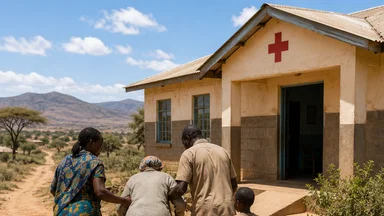
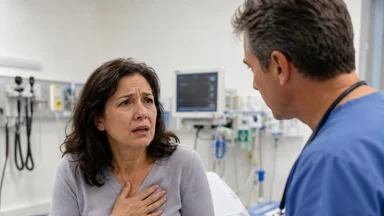
Martha Achieng, a 58-year-old farmer from Siaya County in western Kenya, woke up one morning unable to move her right arm or speak clearly. Her son flagged down a matatu—a shared minibus—and they drove two hours to a district hospital. The nurse suspected malaria. By the time a doctor ordered a CT scan, 14 hours had passed. The window for alteplase, the clot-busting drug that can reverse disability if given within 4.5 hours, had long closed. Achieng's story is not unusual. Across rural Kenya, stroke patients routinely arrive too late for guideline-recommended thrombolysis, raising uncomfortable questions about whether global protocols fit local realities.
The 4.5-Hour Window That Closes Before Patients Arrive
Alteplase, a tissue plasminogen activator, works by dissolving blood clots that block cerebral arteries. The drug's efficacy drops sharply after 4.5 hours from symptom onset, beyond which the risk of hemorrhagic transformation outweighs benefits. This time limit, established by the NINDS and ECASS trials in the 1990s, is enshrined in guidelines from the American Heart Association, the European Stroke Organisation, and the World Health Organization.
In rural Kenya, the median time from symptom onset to hospital arrival—called "time-to-door"—ranges from 12 to 24 hours, according to a 2023 study from Moi Teaching and Referral Hospital in Eldoret. Only 2–3% of all Kenyan stroke patients receive thrombolysis, compared with 10–15% in high-income countries. At Kenyatta National Hospital, the largest referral center in East Africa, most stroke patients arrive after the 4.5-hour window has closed.
Geography is a major barrier. Many rural Kenyans live more than 50 kilometers from a hospital with a CT scanner. Roads are often unpaved and impassable during rainy seasons. Ambulance services are sparse; fewer than 10% of patients in rural areas arrive by ambulance, according to a 2022 survey. The rest rely on family cars, taxis, or matatus, which add unpredictable delays.
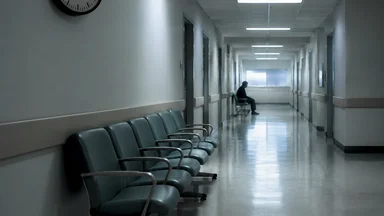
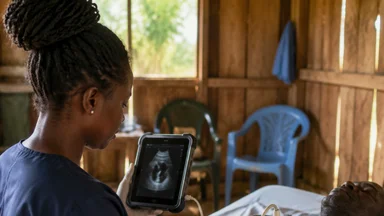
Even when patients reach a hospital, they may wait hours for a CT scan. Most rural facilities lack on-site radiologists, and scans are interpreted remotely—if at all. A 2024 audit in five counties found that stroke patients waited an average of 3.5 hours in the emergency department before imaging was completed.
Why Rural Referral Chains Fail Stroke Patients
Kenya's public health system is structured around a tiered referral network: dispensaries, health centers, sub-county hospitals, county referral hospitals, and national referral hospitals. For stroke, this chain breaks down at multiple points. Most dispensaries and health centers have no CT scanners, no neurologists, and no stroke protocols. Health workers often misdiagnose stroke as malaria, meningitis, or even witchcraft—especially when patients present with altered consciousness or seizures.
A 2023 study in western Kenya found that 40% of stroke patients were initially misdiagnosed at primary care facilities. The classic FAST signs—facial droop, arm weakness, speech difficulty, time to call—are not widely known among community health volunteers. Even when stroke is recognized, referral protocols prioritize trauma and obstetric emergencies. Stroke patients may wait hours for a referral letter or transport.
Ambulance services, where they exist, are often dedicated to maternal and trauma cases. The Kenya Red Cross operates a fleet of ambulances, but coverage is thin in rural areas. Private ambulance services cost upwards of 10,000 Kenyan shillings (roughly US$75) for a one-way trip—prohibitive for most families. Many patients end up in matatus, which offer no medical care en route.
No pre-notification system exists to alert receiving hospitals that a stroke patient is incoming. Without this, urban stroke units cannot prepare a CT scanner or assemble a thrombolysis team. The result: even patients who arrive within the window may face in-hospital delays that push them past 4.5 hours.
The Evidence Gap: No Trials for Delayed Thrombolysis in Africa
The guidelines that govern stroke care worldwide are built on clinical trials that enrolled almost no African patients. The landmark NINDS trial (1995) included 624 patients, all from the United States. The ECASS III trial (2008), which extended the window to 4.5 hours, drew patients from 19 European countries. Not a single site was in sub-Saharan Africa.
This matters because African populations may have different stroke etiology, risk profiles, and treatment responses. In Kenya, up to 30% of strokes are hemorrhagic, compared with roughly 13% in high-income countries. Alteplase is contraindicated in hemorrhagic stroke, making accurate diagnosis critical. But without perfusion CT or MRI—rare in rural hospitals—distinguishing ischemic from hemorrhagic stroke relies on non-contrast CT alone, which is less sensitive.
Some experts argue that an extended thrombolysis window—beyond 4.5 hours—could benefit patients in low-resource settings where delays are unavoidable. A few small studies in Asia and Africa have explored tenecteplase, a newer clot-buster with longer half-life and easier administration, given up to 6 hours after onset. But no randomized controlled trial has been conducted in Africa to test safety or efficacy in this context.
"We are essentially practicing evidence-free medicine when we apply Western guidelines here," says Dr. James Orwa, a neurologist at Aga Khan University Hospital in Nairobi. "We need local data to know whether a 6-hour window is safe in our population. Without it, we are guessing." Others counter that without such trials, the safest course is to adhere strictly to the 4.5-hour limit, given the known risks of hemorrhage.
Tele-Stroke Networks Offer a Partial Fix
Tele-stroke—remote consultation between rural clinicians and urban stroke specialists—has emerged as a promising workaround. In Kenya, a pilot program launched in 2022 connects four county hospitals to neurologists at Kenyatta National Hospital via WhatsApp and a dedicated teleradiology platform. Rural doctors can share CT images and clinical details, receiving real-time guidance on thrombolysis eligibility and dosing.
Early results are encouraging. In the first year, the program facilitated thrombolysis for 12 patients who might otherwise have been missed. But the scale remains tiny. Only 5–10% of rural health facilities in Kenya have reliable internet connectivity, according to a 2024 Ministry of Health assessment. Power outages are frequent, and many facilities lack backup generators. Even when connectivity is available, the cost of telemedicine equipment—high-resolution monitors, secure servers—can exceed a county health budget.
Some hospitals have adopted a low-tech alternative: sending CT images via WhatsApp groups. This approach is cheap and accessible, but raises concerns about data privacy and image quality. A 2023 study found that WhatsApp-based interpretation was accurate for detecting large-vessel occlusions, but less reliable for subtle early ischemic changes.
Despite these limitations, tele-stroke networks are expanding. The Kenyan Ministry of Health, with support from the World Bank, plans to extend the program to 20 additional counties by 2027. But without parallel investments in connectivity and power, the reach will remain limited.
Prehospital Screening Tools Could Shift the Timeline
Another strategy is to shorten the time-to-door by improving prehospital recognition. The Cincinnati Prehospital Stroke Scale (CPSS)—a three-item test of facial droop, arm drift, and speech—has been validated in Kenyan paramedics. A 2023 study in Nairobi found that paramedics using CPSS correctly identified 85% of strokes, with a moderate false-positive rate.
Community health volunteers, who are the first point of contact for many rural households, are being trained to recognize FAST signs. The Ministry of Health, in partnership with the Kenya Stroke Association, launched a public awareness campaign in 2024 targeting high-burden regions. Radio messages in Swahili and local languages urge listeners to "act FAST" and seek care immediately.
Mobile phone apps for stroke triage have been piloted in Kisumu and Nakuru. One app, called StrokeAlert, allows users to input symptoms and receive a risk score, along with directions to the nearest CT-equipped hospital. But uptake has been low; fewer than 1,000 downloads in the first six months, according to the developer.
The national stroke registry, launched in 2024, aims to track delays and outcomes systematically. Early data from 10 hospitals show that median time-to-door remains above 10 hours in rural areas, with no significant improvement in the first year. "Registry data will help us identify bottlenecks," says Dr. Faith Mwangi, the registry's coordinator. "But data alone won't shorten the time. We need systemic change."
Thrombolysis Isn't the Only Answer: Aspirin and Rehabilitation
For the vast majority of Kenyan stroke patients who miss the thrombolysis window, treatment shifts to secondary prevention and rehabilitation. Aspirin, given within 48 hours of ischemic stroke, reduces the risk of death and disability by about 10%. It is cheap—a month's supply costs less than US$2—and widely available. Yet a 2022 audit in rural hospitals found that only 60% of eligible patients received aspirin within the first two days.
Rehabilitation services are even more scarce. Kenya has fewer than 50 physiotherapists per county, most concentrated in urban areas. Stroke patients in rural settings often receive no formal rehabilitation. Task-shifting—training nurses and community health workers to deliver basic exercises—has shown promise in pilot studies. A 2024 trial in Kilifi County found that nurse-led home-based rehabilitation improved mobility and quality of life at six months, compared with usual care.
Secondary prevention relies on controlling risk factors: hypertension, atrial fibrillation, diabetes, and high cholesterol. Anticoagulation with warfarin is recommended for atrial fibrillation, but monitoring INR levels is difficult in rural clinics. Medication adherence is low—roughly 30% at one year—due to cost, supply gaps, and lack of follow-up. A 2023 study in western Kenya found that only 20% of stroke survivors had their blood pressure controlled to target.
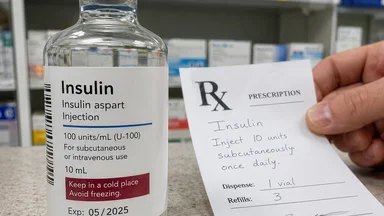
The Philippines public clinic insulin story illustrates a similar challenge: even when essential medicines are available, access barriers undermine their use. In Kenya, the same dynamic plays out with antihypertensives and antiplatelets.
An Uncomfortable Question: Should Guidelines Be Adapted for Africa?
The WHO's stroke protocol recommends thrombolysis only within 4.5 hours, reflecting the global evidence base. But for the majority of Kenyan patients—and many across sub-Saharan Africa—this recommendation is effectively irrelevant. Some African neurologists argue that the guidelines should be adapted to include an extended window of up to 6 hours for patients who cannot arrive sooner, provided they meet strict imaging criteria.
Others disagree, pointing to the lack of safety data. "Extending the window without evidence would be unethical," says Dr. Orwa. "We could cause more harm than good." He advocates for pragmatic trials of tenecteplase in rural settings, where the drug's longer half-life could simplify administration. The WHO Essential Medicines List includes alteplase, but access remains minimal in Kenya due to cost and procurement challenges.
The debate mirrors broader tensions in global health: whose evidence counts, and how should guidelines balance universal standards with local realities? For now, most Kenyan stroke patients will continue to arrive too late for thrombolysis. The question is whether the system will adapt to them—or leave them behind.
What Can Be Done?
Several interventions could improve outcomes without waiting for new trials. Strengthening ambulance services and pre-notification systems could shorten time-to-door. Expanding tele-stroke networks and investing in reliable connectivity would bring specialist expertise to rural hospitals. Public awareness campaigns, while slow, can shift community norms around seeking care.
But none of these are quick fixes. As Dr. Mwangi puts it: "We are building a stroke care system from scratch. It will take years, maybe decades." In the meantime, patients like Martha Achieng will continue to lose the window—not because the drugs don't work, but because the system can't deliver them in time.
The Cost of Inaction: Long-Term Disability and Economic Burden
The consequences of missed thrombolysis extend beyond individual patients. Stroke is a leading cause of long-term disability in Kenya, and the majority of survivors require ongoing care. A 2022 study in Nakuru County found that 60% of stroke survivors had moderate to severe disability at three months, limiting their ability to work or perform daily activities. For a farming community, a disabled breadwinner can push a household into poverty. The economic burden is estimated at roughly US$500 per patient annually in direct medical costs and lost income—a significant sum where the median household income is around US$1,500 per year.
Without thrombolysis, more patients survive with deficits that could have been avoided. Rehabilitation services, already scarce, are further strained. The Kenya Stroke Association estimates that fewer than 5% of stroke survivors in rural areas receive any formal rehabilitation within the first year. Family members, often women, become informal caregivers, sacrificing their own livelihoods. A 2024 qualitative study in Kisumu documented caregivers reporting depression, financial strain, and social isolation. "I had to stop selling vegetables at the market to take care of my husband," one participant said. "Now we have no income."
Addressing the prehospital delay could reduce this burden. A modeling study by the University of Nairobi estimated that every 30-minute reduction in median time-to-door could prevent roughly 200 additional disability-adjusted life years (DALYs) per year nationwide. But achieving such reductions requires coordinated investment across multiple sectors—health, transport, and telecommunications.
Community-Based Innovations: Low-Cost Alternatives to High-Tech Solutions
Not all solutions require expensive technology. In rural Busia County, a community health worker program trains volunteers to use a simple paper-based algorithm to identify stroke symptoms and arrange transport to the nearest health center. The algorithm, adapted from the FAST criteria, includes pictures and local language descriptors. A 2024 evaluation found that communities with trained volunteers had a median time-to-door of 8 hours, compared with 16 hours in control villages. Although still beyond the 4.5-hour window, the improvement suggests that community-level interventions can shift behavior.
Another innovation involves motorcycle ambulances—modified motorbikes with a stretcher sidecar—used in parts of Homa Bay County. These can navigate narrow, unpaved roads that ambulances cannot. The cost is roughly US$2,000 per unit, compared with US$50,000 for a standard ambulance. A 2023 pilot showed that motorcycle ambulances reduced transport time to the nearest hospital by an average of 45 minutes for stroke patients. However, they offer no medical care during transit, and patients with severe symptoms may not be suitable.
These grassroots efforts highlight a tension between aspirational standards and pragmatic adaptation. Critics argue that promoting low-cost alternatives may divert attention from the need for comprehensive stroke systems. Proponents counter that incremental improvements are better than none. "We can't wait for the perfect system," says Dr. Mwangi. "Every minute counts. If a motorcycle ambulance gets a patient to a CT scanner an hour earlier, that could be the difference between walking out of the hospital or being bedridden."
This article is for informational purposes only and does not constitute medical advice. Individual treatment decisions should be made in consultation with a qualified healthcare provider.