South African Gold Miners Develop COPD Twice as Fast as Urban Nonsmokers
In the gold mines of South Africa, a longitudinal study of roughly 1,200 miners in Carletonville found that forced expiratory volume in one second (FEV1) declined at an average rate of 60–70 mL per year after 20 years of underground work, compared with 25–30 mL in urban nonsmokers. This doubling of lung function decline is driven primarily by crystalline silica dust, not tobacco. Men who descend into the earth day after day develop chronic obstructive pulmonary disease (COPD) at roughly twice the speed of urban nonsmokers who breathe comparatively clean air. The driver is not tobacco—though many miners also smoke—but crystalline silica dust, the fine particulate that scars lung tissue relentlessly. This disparity is not a footnote in occupational health; it is a window into how environment, biology, and policy interact to shape disease trajectories.
A Silicate Storm in the Lungs: Why Gold Miners Face a Different Disease Trajectory
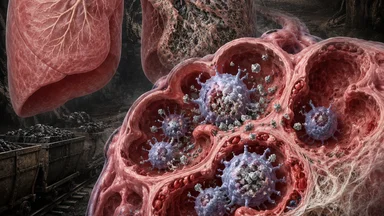
Crystalline silica is the mineral that makes up much of the Earth's crust, but inside the lung it is anything but benign. When miners drill, blast, or crush gold-bearing ore, they generate respirable particles less than 10 micrometres in diameter—small enough to bypass the mucociliary escalator, the lung's first-line defence that traps and moves larger particles upward. These silica particles settle deep in the alveoli, where macrophages, the immune cells tasked with clearing debris, engulf them. But silica is cytotoxic: instead of being digested, the particles kill the macrophage, releasing inflammatory cytokines and attracting more macrophages in a futile, destructive loop.
The result is a chronic inflammatory state that persists for years. Tumour necrosis factor alpha (TNF-α), interleukin-8 (IL-8), and other mediators recruit neutrophils, which release proteolytic enzymes such as neutrophil elastase. Elastase degrades elastin in alveolar walls, causing the airspace enlargement characteristic of emphysema. Simultaneously, fibroblast activation leads to peribronchiolar fibrosis, narrowing small airways. This mixed pathology—both emphysema and chronic bronchitis—differs from the predominantly emphysematous pattern seen in many smokers, and it progresses faster.
Comparisons with coal workers' pneumoconiosis, or black lung, are instructive. Coal miners also develop fibrotic lung disease, but the silica content of coal dust varies, and the disease course is typically slower. Gold miners in South Africa, exposed to dust that is often more than 80% silica, face a more aggressive form of lung damage. Autopsy studies from the 1990s already showed that silica-related fibrosis could appear after as few as five years of underground work, a latency far shorter than for coal workers.
The speed of decline is not uniform; it depends on cumulative exposure. But the threshold for harm appears to be low. Studies by Hnizdo and colleagues (1997) and later by Ehrlich and coworkers (2004) suggested that even short-term exposure to high silica concentrations can trigger accelerated lung function loss that continues after exposure ends—a phenomenon known as progressive massive fibrosis. This makes early intervention critical, yet it is rarely achieved.
The Urban Nonsmoker Baseline: What Cleaner Air and Healthy Lungs Look Like
To understand how fast miners lose lung function, one must compare them to a reference population with minimal occupational exposure. Urban nonsmokers in Johannesburg, for instance, show a typical age-related decline in FEV1 of roughly 25 to 30 millilitres per year after age 30. Their ambient particulate matter (PM2.5) levels, while higher than those in many European cities, are far lower than the dust concentrations inside a mine. COPD prevalence in this group is under 5%—mostly attributable to genetic factors, past infections, or undiagnosed asthma.
This baseline is not perfect; urban air pollution, especially from vehicle emissions and household fuel burning, contributes to some lung function decline. But the contrast with miners is stark. In the Carletonville cohort, miners lost FEV1 at 60 to 70 mL per year—more than double the urban rate. Even after adjusting for smoking, the gap remains wide, confirming that silica is the primary driver.
Genetic susceptibility also plays a role. Alpha-1 antitrypsin deficiency, a genetic condition that predisposes to emphysema, has a prevalence of roughly 1–2% in the general population, but data specific to South Africa are lacking; a 2015 review by de Serres and Blanco estimated a prevalence of about 1% in African populations, though this is based on limited screening. Its prevalence in South African miners has not been systematically studied. However, even among those with normal alpha-1 levels, the silica burden overwhelms protective mechanisms. The urban nonsmoker data remind us that healthy lungs can maintain function for decades if triggers are absent.
Doubling the Speed of Decline: Data from a Mining Cohort in Carletonville
One of the most compelling sources of evidence comes from a longitudinal study of roughly 1,200 gold miners in Carletonville, a town southwest of Johannesburg that sits atop the Witwatersrand gold reef. Over 15 years, researchers tracked lung function using spirometry, recorded occupational histories, and documented smoking habits. The results, published in the early 2000s and reinforced by subsequent analyses, paint a consistent picture: miners lost FEV1 at an average rate of 60–70 mL per year after 20 years of underground work, compared with 25–30 mL in urban controls.
The hazard ratio for developing COPD—defined by the Global Initiative for Chronic Obstructive Lung Disease (GOLD) criteria—was 2.1 for miners versus urban nonsmokers, after adjusting for age, smoking pack-years, and body mass index. This means that at any given time, a miner was roughly twice as likely to meet the diagnostic threshold as a nonsmoker in the city. Importantly, the effect persisted among miners who had never smoked, suggesting that silica alone is sufficient to cause clinically significant COPD.
The dose-response relationship was steep at low cumulative exposure levels. Miners with fewer than 10 years underground already showed accelerated decline, and the slope did not plateau. This challenges the notion that only long-term veterans are at risk; new recruits may be harmed within their first few years. The study also found that the rate of decline did not slow after leaving the mines, indicating that the inflammatory process becomes self-sustaining.
Critics might argue that selection bias could affect these results—healthier men might leave mining early, while those who stay are more resilient. However, the cohort was designed to include both active and retired miners, and sensitivity analyses suggested that the effect was robust. Moreover, similar findings have been reported in studies of Chinese and Brazilian gold miners, lending cross-cultural validity.
The Mechanism Beneath the Numbers: Alveolar Macrophage Dysfunction and Elastase Release
The accelerated decline seen in miners is not merely a statistical curiosity; it reflects a distinct pathophysiology. When a macrophage engulfs a silica particle, the particle's crystalline structure damages the phagolysosomal membrane, releasing enzymes into the cytoplasm. The cell dies by apoptosis or necrosis, spilling its contents into the alveolar space. This triggers a cycle of inflammation: dying macrophages release interleukin-1 beta (IL-1β) and TNF-α, which recruit neutrophils and more macrophages.
Neutrophils are armed with neutrophil elastase, a protease that degrades extracellular matrix proteins. Normally, this activity is balanced by anti-proteases such as alpha-1 antitrypsin, but in the silica-laden lung, the protease burden overwhelms the inhibitors. Elastase cleaves elastin fibres, which are essential for alveolar recoil, leading to permanent airspace enlargement—emphysema. At the same time, transforming growth factor beta (TGF-β) released from macrophages stimulates fibroblasts to deposit collagen around small airways, causing fibrosis and narrowing. The result is a mixed obstructive and restrictive pattern that accelerates FEV1 decline.
Animal models confirm this sequence. Rats exposed to crystalline silica develop neutrophilic inflammation within days, followed by fibrotic nodules within weeks. Human tissue studies show similar changes: macrophages laden with silica particles are surrounded by collagen bundles and fragmented elastin. This dual pathology—emphysema plus fibrosis—explains why miners often have a rapid, relentless decline that does not respond well to standard COPD therapies.
Understanding this mechanism has therapeutic implications. Drugs that block neutrophil elastase, such as alpha-1 antitrypsin augmentation, might theoretically slow decline in miners, but no trials have been conducted. Anti-inflammatory agents like roflumilast have not been tested in occupational COPD. The lack of evidence means that clinicians must rely on removal from exposure and smoking cessation—both important but insufficient.
Why Diagnosis Comes Late: Silicosis Masking COPD in Routine Exams
In South African mine clinics, the focus has historically been on silicosis, a fibrotic lung disease visible on chest X-rays as small nodules. The Compensation for Occupational Injuries and Diseases Act recognizes silicosis but does not explicitly cover COPD as an occupational disease unless it is accompanied by silicosis. This creates a perverse incentive: clinicians look for nodules, not airway obstruction. Spirometry, the gold standard for diagnosing COPD, is rarely performed in routine mine health surveillance. A 2015 audit found that fewer than 10% of miners received lung function tests annually.
Miners themselves often attribute their shortness of breath to aging or smoking, not to their work. Dyspnoea develops gradually, and a miner may lose 30% or more of lung function before noticing symptoms. By the time they seek care, the FEV1 is often below 50% of predicted, and irreversible damage has occurred. Silicosis may be diagnosed incidentally on a chest X-ray taken for tuberculosis screening, and only then is COPD considered.
The overlap between silicosis and COPD complicates diagnosis. Both cause dyspnoea, cough, and sputum production, and both reduce exercise tolerance. However, silicosis primarily affects the upper lobes and causes nodular opacities, while COPD is defined by airflow limitation. A miner can have both, and the presence of silicosis often overshadows the COPD component. This diagnostic overshadowing delays appropriate treatment, such as bronchodilators or pulmonary rehabilitation.
Even when COPD is diagnosed, management is suboptimal. In a 2018 survey of mine health services, only 30% of miners with confirmed COPD were prescribed inhaled bronchodilators, and fewer than 5% received combination therapy with inhaled corticosteroids. The reasons include cost, lack of training among clinic nurses, and a belief that the disease is untreatable once established. Yet evidence from other settings suggests that early use of long-acting bronchodilators can slow decline and improve quality of life.
A Preventable Gap: What Occupational Health Policy Could Change
South Africa's occupational exposure limit for respirable crystalline silica has not changed substantially in decades. As of 2024, the limit remains 0.1 mg/m³ over an 8-hour shift, a level that some researchers argue is still too high. The US National Institute for Occupational Safety and Health (NIOSH) recommends 0.05 mg/m³, and even that may not eliminate risk. In practice, many mines exceed the limit, especially during drilling and blasting operations. Wet drilling, which sprays water to suppress dust, can reduce respirable silica by up to 90%, but it is not universally implemented. Ventilation systems also help, but they require maintenance and monitoring.
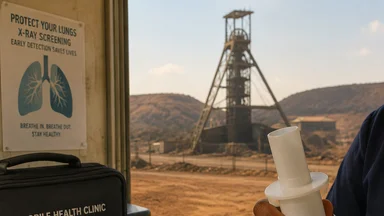
Regular spirometry screening could detect early decline and prompt removal from exposure before irreversible damage occurs. Some countries, such as the United Kingdom, require annual lung function testing for workers in high-risk industries. South Africa has no such mandate for gold miners. The Mine Health and Safety Act requires a medical examination at hire and periodically thereafter, but the content of that examination is not standardized, and spirometry is often omitted.
The compensation system is another barrier. Currently, miners can claim compensation for silicosis, but COPD alone is not compensable unless it is severe and clearly linked to work. This discourages reporting and creates a disincentive for employers to invest in prevention. A 2020 report from the Bench Marks Foundation estimated that fewer than 5% of miners with occupational lung disease ever receive compensation. Reforming the system to include COPD would align incentives with health.
Cost is often cited as a barrier, but preventive measures are likely cost-effective. A 2019 modelling study found that reducing silica exposure to 0.05 mg/m³ would prevent roughly 200 cases of COPD per 10,000 miners over a working lifetime, saving millions in healthcare costs and lost productivity. The upfront investment in ventilation and wet drilling is modest compared with the long-term burden of disease.
Limitations and Counter-Arguments: Not All Miners Develop COPD
It is important to acknowledge that not all gold miners develop COPD. The Carletonville study found that after 20 years of underground work, roughly 30% of miners met GOLD criteria for COPD, compared with about 15% of urban nonsmokers. This means that the majority of miners did not develop clinically significant disease, even after decades of exposure. Genetic factors, such as polymorphisms in genes encoding inflammatory cytokines or antioxidant enzymes, may confer resistance or susceptibility. For example, variants in the glutathione S-transferase (GST) genes, which affect detoxification of reactive oxygen species, have been associated with accelerated lung function decline in silica-exposed workers. A 2012 study by Yu and colleagues found that miners with the GSTM1 null genotype had a steeper FEV1 decline than those with the active genotype. These genetic modifiers could partly explain why some miners remain relatively healthy while others deteriorate rapidly.
Another limitation of the evidence is the difficulty in disentangling the effects of silica from those of other occupational exposures, such as diesel exhaust, blasting fumes, and noise. Miners are also at increased risk of tuberculosis, which can cause permanent lung damage and mimic COPD. The Carletonville study attempted to control for TB history, but residual confounding is possible. Moreover, the urban nonsmoker comparison group may not be fully representative; urban air pollution, while lower than mine dust, still contributes to lung function decline, and the baseline rate of 25–30 mL per year may already be elevated compared with rural populations. A 2018 study by Rice and colleagues found that rural nonsmokers in South Africa had an average FEV1 decline of only 20 mL per year, suggesting that the urban baseline is not pristine.
Critics also point out that the hazard ratio of 2.1, while statistically significant, does not prove causation. Confounding by socioeconomic status, nutrition, access to healthcare, and other unmeasured factors could bias the association. Miners are typically from lower socioeconomic backgrounds, which is independently associated with worse lung function. However, the dose-response relationship and the consistency of findings across different mining populations strengthen the case for a causal effect of silica.
Finally, some argue that the focus on COPD may detract from other pressing health issues in mining communities, such as HIV/AIDS and tuberculosis, which have higher mortality. While this is a valid concern, occupational COPD is a chronic, disabling condition that affects quality of life and productivity. Addressing it does not require diverting resources from other priorities; rather, integrated health services that screen for both infectious and non-communicable diseases can be more efficient. The goal is not to rank diseases by importance but to ensure that all preventable harms are addressed.
The Takeaway for Clinicians: Consider Occupational Exposure in Rapid Decline
For clinicians in South Africa—and anywhere with mining populations—the message is straightforward: when a male patient over 40 presents with rapid lung function decline, asking about mining history can change the diagnostic and management pathway. A simple question—"Have you ever worked underground?"—is a general recommendation, not personalized advice. If the answer is yes, spirometry should be performed and repeated annually as part of standard occupational health surveillance. A low-dose CT scan may reveal early emphysema or silicosis that a chest X-ray would miss.
Smoking cessation remains critical, but it is not sufficient. The silica-driven inflammation continues even after a miner stops smoking, and lung function may still decline. Treatment should follow GOLD guidelines, but clinicians should be aware that the response to inhaled corticosteroids may be less robust in silica-related COPD, given the fibrotic component. Triple therapy with an inhaled corticosteroid, long-acting beta-agonist, and long-acting muscarinic antagonist may slow decline in a subset of patients, but evidence is extrapolated from smoking-related COPD.
Reporting suspected occupational COPD to public health authorities, such as the National Institute for Occupational Health in South Africa, can help build surveillance data and inform policy. The condition is not rare; it is merely unrecognized. In one study of 500 former gold miners presenting to a respiratory clinic in Gauteng, 40% had COPD, and the majority had never been told their condition was work-related.
The parallels with other occupational lung diseases are clear. As noted in our earlier piece on coal mine dust monitoring, the problem is systemic: exposure limits, surveillance, and compensation lag behind the evidence. Similarly, tuberculosis drug resistance in mining shifts highlights how migration and working conditions amplify infectious disease. The gold miner's lung is a sentinel for failures in occupational health that affect millions worldwide.
This article is for informational purposes only and does not constitute medical advice. Readers should consult a qualified healthcare professional for any health concerns.