Kenya Rural Hypertension Patients Reach Clinic Only After Heart Wall Thickens
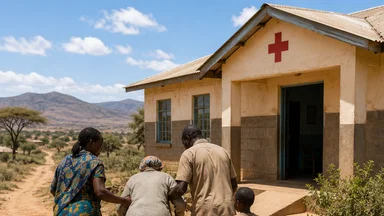
It begins silently. For months or years, blood pressure climbs inside arteries, pushing against vessel walls with a force that the heart was not designed to withstand. In rural Kenya, where blood pressure screening is sporadic and many adults have no annual check-up, the first clue of hypertension often arrives not from a cuff reading but from a heart that has already begun to change. A study from a rural clinic in western Kenya found that roughly 30% of patients diagnosed with hypertension for the first time already had left ventricular hypertrophy—a thickening of the heart's muscular wall that signals months or years of uncontrolled pressure. By the time they reach a clinic, the damage is underway.
A Diagnosis Too Late: The Thickened Heart as a Silent Marker
Left ventricular hypertrophy, or LVH, is the heart's attempt to adapt. Faced with chronic pressure overload, the left ventricle—the chamber that pumps oxygenated blood to the body—builds extra muscle. Initially, this adaptation helps maintain cardiac output. But over time, the thickened wall becomes stiff, reducing the chamber's ability to fill with blood between beats. In rural Kenya, LVH is detectable only by echocardiogram or, less precisely, by electrocardiogram. Neither tool is available at most primary health centers. A basic blood pressure cuff, the standard screening device, cannot reveal whether the heart has already remodeled.
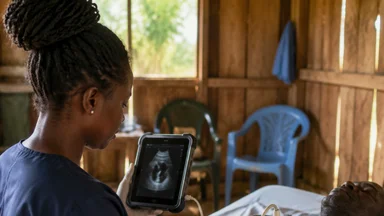
The study, conducted at a district hospital in Busia County, used portable echocardiography to screen newly diagnosed hypertensive patients. Among the 30% with LVH, many had no symptoms. They had come to the clinic for other reasons—a headache, a routine antenatal visit, or a sick child—and had their blood pressure measured almost by chance. The finding echoes patterns seen across sub-Saharan Africa, where hypertension prevalence is high but awareness and treatment rates remain low. The World Health Organization estimates that fewer than one in four adults with hypertension in the region have their condition controlled.
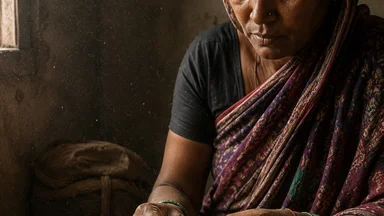
For patients like 52-year-old farmer Grace Anyango, the diagnosis came as a surprise. She visited the clinic for joint pain and left with a blood pressure reading of 175/105 mmHg and an echocardiogram showing a thickened septal wall. “I had no idea my heart was in trouble,” she told a researcher. “I felt fine.” That is the insidious nature of hypertensive heart disease: it progresses without warning until a crisis—a stroke, heart failure, or sudden cardiac death—announces its presence.
The Mechanism: How Untreated Hypertension Remodels the Heart
To understand why LVH matters, it helps to trace the chain of events inside the chest. Chronic high pressure forces the left ventricle to contract against greater resistance. In response, individual heart muscle cells—cardiomyocytes—grow larger. The ventricular wall thickens, a process called concentric hypertrophy. This adaptation preserves the heart's ability to eject blood, but at a cost. The thickened muscle requires more oxygen, and as the wall stiffens, the chamber's filling capacity declines. Over years, this leads to diastolic dysfunction: the heart can squeeze normally but cannot relax enough to fill properly.
Diastolic dysfunction is the precursor to heart failure with preserved ejection fraction (HFpEF), a form of heart failure that is increasingly common worldwide. In HFpEF, the ejection fraction—the percentage of blood pumped out with each beat—remains normal, but the patient experiences breathlessness, fatigue, and fluid retention. In Kenya, as in many low- and middle-income countries, HFpEF is often misdiagnosed as asthma or pneumonia, leading to inappropriate treatment and worsening outcomes.
Beyond heart failure, untreated hypertension and LVH set the stage for atrial fibrillation (AFib). As the left atrium stretches under pressure, its electrical stability falters. AFib develops, and with it, the risk of stroke multiplies five- to sevenfold. A study by the African Heart Network, published in 2022 in the journal Cardiovascular Medicine, found that AFib-related strokes in sub-Saharan Africa tend to occur at younger ages and with higher mortality than in high-income countries. The mechanism is clear: unchecked hypertension remodels not just the ventricle but the entire cardiovascular system, turning a manageable condition into a multi-organ threat.
Why Rural Clinics Miss the Early Signs
The reasons for late diagnosis are rooted in health system constraints. Blood pressure screening in rural Kenya is opportunistic rather than systematic. Community health workers visit households for immunization campaigns or malaria testing, but routine BP checks are not integrated into their workflows. When patients do have their pressure measured, a single reading is often normal due to white-coat effect anxiety or diurnal variation. Without ambulatory monitoring—a device worn for 24 hours to capture average pressure—many cases of masked hypertension go undetected.
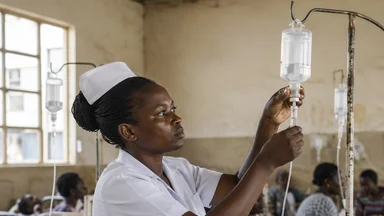
Even when hypertension is diagnosed, confirming LVH requires imaging. Echocardiography machines are concentrated in urban referral hospitals, typically a two- to four-hour journey from rural villages. The cost of an echocardiogram, around US$ 15 to US$ 30, is prohibitive for many households living on less than US$ 2 per day. A 2023 survey in Siaya County found that 60% of patients referred for echocardiography never completed the test, citing transport costs and lost wages as barriers. Without imaging, clinicians prescribe antihypertensives without knowing whether target-organ damage has already begun.
Training also plays a role. Most nurses and clinical officers at primary care centers are not trained to interpret electrocardiograms for LVH patterns, such as Cornell voltage or Sokolow-Lyon criteria. A study by Dr. Mary Mbugua and colleagues, published in The Lancet Global Health in 2021, noted that task-shifting hypertension care to non-physician clinicians improves BP control rates, but only when accompanied by diagnostic support. Without that support, the thickened heart remains invisible until it causes symptoms.
The Wealth Gradient: Urban Patients Catch It Sooner
In Nairobi, the picture is different. Private clinics in upscale neighborhoods offer ambulatory blood pressure monitoring, routine electrocardiograms, and same-day echocardiography. Wealthy patients are diagnosed at stage 1 hypertension, often before LVH develops. Employer wellness programs screen annually, and early treatment with combination therapy prevents the remodeling cascade. A 45-year-old executive in Nairobi can expect to have his BP checked at a company-sponsored health fair, be prescribed a single-pill combination of amlodipine and losartan, and return to normal pressure within weeks.
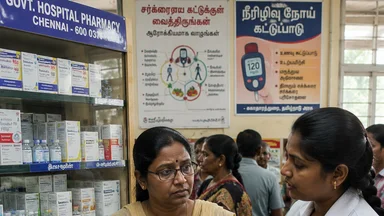
The contrast with poorer urban residents is stark. In informal settlements like Kibera and Mathare, public health facilities are understaffed and under-resourced. Patients queue for hours to see a clinician who may have only a manual sphygmomanometer and a limited drug supply. A 2024 study from the African Population and Health Research Center found that hypertension prevalence in Nairobi's informal settlements was comparable to that in formal housing areas, but awareness and treatment rates were significantly lower. Among residents with hypertension in Kibera, only 35% were aware of their condition, compared to 65% in upper-income neighborhoods.
The wealth gradient extends to outcomes. LVH prevalence at first diagnosis is higher among poor urban patients than among their wealthy counterparts, mirroring the rural pattern. Dr. Jane Wanjiku, a cardiologist at Kenyatta National Hospital, told me that she sees patients from informal settlements with ejection fractions below 40%—advanced heart failure—who have never been on antihypertensive therapy. “They come in when they cannot breathe lying flat,” she said. “By then, we are managing a chronic disease that should have been prevented.”
System Fixes That Could Change the Trajectory
Several promising approaches could shift the curve. Task-shifting hypertension care to community health workers has shown success in countries like Ghana and South Africa. In Kenya, the Ministry of Health is piloting a program in which trained community health workers use validated automated BP devices and follow referral algorithms to identify patients with elevated readings. Those with sustained hypertension are referred to a primary care facility for confirmation and treatment initiation. The model, supported by the WHO HEARTS technical package, could expand screening coverage in rural areas.
Portable handheld ultrasound devices, costing roughly US$ 2,000 to US$ 4,000, are being piloted in Busia and Machakos counties. These devices can detect LVH and other structural abnormalities at the point of care, bypassing the need for referral to a distant hospital. A study from the University of Nairobi found that nurses trained for two weeks could acquire interpretable echocardiographic images using a handheld probe, with good correlation to standard echo findings. If scaled, this technology could bring target-organ assessment to rural clinics for the first time.
Single-pill combination therapy—fixed-dose combinations of two or three antihypertensive drugs—improves adherence and BP control rates. In a randomized trial in Kenya, patients on a single-pill combination of amlodipine and telmisartan had significantly higher adherence at six months than those on separate pills. The WHO has included single-pill combinations in its Model List of Essential Medicines, and Kenya's national drug formulary now lists several options. Lowering the cost of these combinations through negotiated procurement could make them accessible in the public sector.
Expanding national health insurance to cover annual screening for adults over 40 is another lever. Kenya's National Hospital Insurance Fund (NHIF) currently covers hypertension treatment but not routine screening. A 2025 cost-effectiveness analysis by researchers at the University of Nairobi and the Kenya Medical Research Institute estimated that adding annual BP screening for adults over 40 would prevent roughly 10,000 cardiovascular events over a decade, at a cost of US$ 150 per disability-adjusted life year averted. That is well below the threshold considered cost-effective in Kenya. Yet political will and budget allocation remain slow.
What Delays Means for Kenya's Health Budget
The economic argument for early detection is compelling. Treating heart failure costs roughly 10 times more per patient per year than managing hypertension alone. A 2022 study from the Kenya Medical Research Institute estimated that the annual cost of heart failure care—including hospitalizations, medications, and follow-up—averages US$ 500 per patient, compared to US$ 50 for well-controlled hypertension. Stroke care adds another layer: acute management, rehabilitation, and lost productivity can push costs into the thousands of dollars per patient.
Kenya's non-communicable disease burden is projected to double by 2030 if current trends continue. The Ministry of Health's 2021–2025 NCD strategy calls for a 25% reduction in premature cardiovascular mortality, but progress has been slow. A 2024 audit by the Kenya Non-Communicable Diseases Alliance found that only 12 of Kenya's 47 counties had allocated budget for hypertension screening in primary care. Without investment in early detection, the health system will face an ever-growing load of advanced heart disease that is more expensive and harder to treat.
Countries like Costa Rica and Thailand have shown that widening primary care access to include screening and treatment for hypertension can cut cardiovascular mortality. Costa Rica's centralised primary care network, with nurse-led chronic disease clinics, achieved a 40% reduction in stroke mortality between 2000 and 2015. Thailand's universal health coverage package includes annual BP checks for adults over 40, with referral pathways to district hospitals for confirmation and treatment. Kenya could adapt these models, but doing so requires sustained political commitment and a shift from curative to preventive spending.
A Practical Path: From Echo to Algorithm
In the near term, simplifying LVH screening could save lives. Electrocardiography, though less sensitive than echocardiography, is cheaper and more widely available. Training nurses to interpret ECG criteria for LVH—such as the Cornell voltage index (R in aVL plus S in V3 greater than 28 mm in men or 20 mm in women) or the Sokolow-Lyon index (S in V1 plus R in V5 or V6 greater than 35 mm)—could flag patients who need referral. A 2023 pilot in Kisumu County found that nurses with two days of ECG training could identify LVH with 80% sensitivity, compared to cardiologist-read echo.
Tele-cardiology platforms can link rural clinics to specialists at urban hospitals for remote review of ECGs and echocardiograms. In a program run by the Kenya Cardiac Society, clinicians in rural facilities send ECG tracings via smartphone to a central reading center, where a cardiologist provides a report within 24 hours. The platform, supported by the non-profit organization Health Informatics International, has processed over 5,000 ECGs since 2022. Expansion to more facilities could reduce the diagnostic gap.
Bundling hypertension care with existing chronic disease clinics—such as those for diabetes and HIV—can reduce loss to follow-up. In Kenya, HIV clinics have strong patient retention and adherence support systems. Integrating hypertension screening into these visits, as piloted in the AMPATH program, has shown that patients with both conditions are more likely to achieve BP control than those in stand-alone hypertension clinics. The approach leverages existing infrastructure and trust.
Ultimately, success should be measured not just by blood pressure numbers but by a reduction in LVH prevalence at first visit. A drop from 30% to 20% over five years would signal that earlier detection is working. Until then, the thickened heart will remain a silent marker of a system that catches disease too late.