Philippines Public Clinic Insulin Vials Sit Expired as Patients Buy Vials Privately
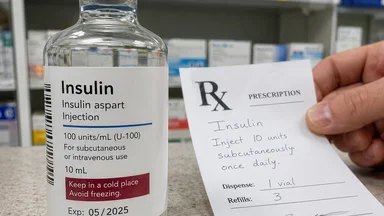
In a city-run health center in Manila's Tondo district, glass vials of insulin sit in a refrigerator behind the nurse's station. Some have expiration dates that passed months ago. Meanwhile, across the street, a private pharmacy sells the same brand of insulin—at a price that can consume a quarter of a minimum-wage worker's monthly income. This is the everyday reality of type-2 diabetes care in the Philippines, where public supply and patient access exist on separate planes.
Vials Stocked, Patients Turned Away
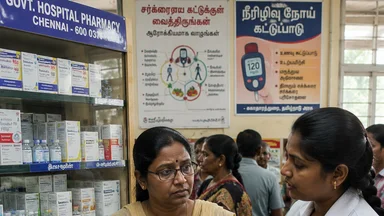
Public clinics in the Philippines receive insulin through a central procurement system. The vials arrive in bulk, often in quantities that reflect national estimates rather than local demand. At the Tondo health center, a nurse who asked not to be named described a familiar cycle: the monthly insulin supply, intended to serve roughly 30 patients per day, is exhausted within the first week. For the remaining three weeks, patients are told the clinic has no stock.
Yet the same clinic's refrigerator sometimes holds vials that approach or exceed their expiration date. These are not dispensed. The nurse explained that doctors are hesitant to prescribe insulin that may have degraded potency, even if the expiration date is still weeks away. And there is no system to transfer near-expiry vials to facilities with higher turnover.
As a result, patients who rely on the public clinic for free insulin find themselves in a bind: the medication is physically present but practically unavailable. The tension between supply and access is not a shortage in the usual sense—it is a mismatch between procurement and consumption.
Consider the case of Maria, a 54-year-old grandmother from Tondo who has been managing type-2 diabetes for eight years. She visits the health center every month, waking before dawn to queue by 5 a.m. Some months she receives a full vial of intermediate-acting insulin; other months she is told the supply has run out and she must purchase it herself. Maria earns a living selling homemade snacks on the street, netting roughly PHP 300 to 500 per day. A private pharmacy insulin vial costs about PHP 1,500—three to five days of her income. She sometimes skips her evening dose to stretch the supply, a practice her doctor has warned against. Stories like Maria's are not isolated; they reflect a systemic disconnect that forces patients into a cycle of partial adherence and financial strain.
The Manila Public Clinic Insulin Gap
The Tondo health center is one of many city-run facilities in Metro Manila that provide outpatient diabetes care. Type-2 diabetes is a growing burden in the Philippines, where the prevalence among adults has risen to roughly 7% according to national surveys. At the clinic, patients queue monthly for a checkup and a supply of insulin or oral hypoglycemics. But the free insulin runs out within days.
The nurse estimated that the clinic sees around 30 patients per day with diabetes-related complaints. The monthly stock of insulin vials—typically a few dozen—lasts only five to seven days. After that, patients are referred to private pharmacies or, if they cannot afford private purchase, told to return the following month. Some travel from distant provinces, only to leave empty-handed.
This pattern is not unique to Tondo. Across Manila's public health system, similar stories emerge. A 2024 survey by the Philippine Society of Endocrinology found that over half of public clinics reported intermittent insulin stockouts, and a third acknowledged that some vials expired before use. The gap is not about total supply—it is about distribution and demand forecasting.
Another example comes from a clinic in Quezon City, where a community health worker described a patient who traveled two hours by jeepney to refill his insulin prescription, only to be told the clinic had run out. He could not afford the private pharmacy price and returned home without medication. He was later hospitalized for diabetic ketoacidosis. Such preventable complications add to the burden on an already strained public hospital system.
Why Vials Expire on Site
Several structural factors explain why insulin expires on public clinic shelves. First, procurement is tied to central bidding cycles that operate on annual or semi-annual timelines. The Department of Health aggregates demand from across the country and places a single large order. But local clinics have limited ability to adjust quantities based on actual patient numbers.
Second, insulin requires cold chain storage, and last-mile storage in public clinics is often unreliable. Intermittent power outages, poorly maintained refrigerators, and lack of temperature monitoring can compromise potency. Even if a vial is not yet expired, clinic staff may discard it if they suspect temperature excursion.
Third, there is no real-time redistribution system. When a clinic in a low-demand area receives a batch of insulin that will expire in three months, there is no mechanism to transfer it to a high-volume clinic that could use it. The vials sit until they expire, then are recorded as wastage.
Doctors also contribute to the problem: many are trained to avoid dispensing any medication near its expiration date, even when evidence suggests that most drugs retain potency for months beyond the printed date. Without clear guidance, caution leads to waste.
To these structural issues, one can add the challenge of forecasting demand at the local level. A barangay health center in Pasay City, for example, might receive a shipment of insulin based on the number of registered diabetes patients from the previous year. But patient numbers can shift due to migration, new diagnoses, or deaths. The system does not account for such changes in real time, so some clinics are overstocked while others are understocked. A 2023 study by the Philippine Institute for Development Studies noted that improving demand forecasting could reduce wastage by an estimated 15–30% in pilot facilities.
Private Purchase: A Common Workaround
For patients who cannot access free insulin at the clinic, private purchase is the only option. A month's supply of intermediate-acting insulin at a private drugstore in Manila costs roughly PHP 1,500 to 2,500—equivalent to 15 to 25 percent of the monthly minimum wage in the National Capital Region. For a patient earning minimum wage, that leaves little for food, transport, or other medications.
Some patients skip doses to stretch their supply. A 2023 survey by the Philippine Diabetes Association found that 60 percent of respondents admitted to rationing insulin at least once in the prior year. Others turn to less effective oral medications or traditional remedies. A few share vials with relatives, adjusting doses by guesswork.
The financial strain is compounded by the fact that many patients have comorbidities—hypertension, dyslipidemia, kidney disease—that require additional medications. The cost of insulin alone can push a family into debt. A 2025 qualitative study from the University of the Philippines described patients who sold household assets or borrowed from informal lenders to afford insulin.
This workaround is common, but it is not a solution. It shifts the cost from the public system to the individual, and it perpetuates a cycle of partial adherence and preventable complications.
Trade-offs exist even for patients who manage to purchase insulin. Some choose to buy only half the prescribed amount, alternating between public clinic supply (when available) and private purchase. Others rely on a mix of insulin and cheaper oral medications like metformin, but may not achieve adequate glycemic control. The long-term consequences include higher rates of diabetic complications—nephropathy, retinopathy, neuropathy—which eventually require more expensive care. A 2024 cost-effectiveness analysis by the University of the Philippines estimated that improving insulin access in public clinics could reduce overall diabetes-related healthcare costs by 10–20% over five years, primarily by preventing hospitalizations.
The Retatrutide Contrast
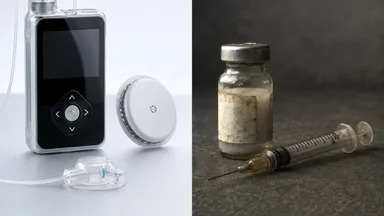
While patients in Manila struggle to access basic insulin, the global conversation about metabolic disease has moved toward newer, more potent agents. In June 2026, Eli Lilly presented safety and tolerability data on retatrutide at the American Diabetes Association annual meeting. Retatrutide is a triple agonist targeting GIP, GLP-1, and glucagon receptors, and in clinical trials it has shown substantial weight loss—on the order of 20 percent or more of body weight—alongside improvements in glycemic control.
These results have generated excitement among endocrinologists and patients in high-income countries, where retatrutide is expected to receive regulatory approval soon. But in the Philippines, even the earlier generation of GLP-1 receptor agonists—liraglutide, semaglutide—are available only through private prescription at high cost. A month's supply of semaglutide can cost PHP 8,000 to 12,000, far beyond the reach of most public clinic patients.
The contrast is stark: while cutting-edge therapies advance metabolic care for those who can afford them, the fundamentals of insulin access remain broken in low- and middle-income settings. Retatrutide may eventually reach the Philippines, but without fixing the procurement and distribution system, it will likely follow the same pattern—available in private pharmacies, absent from public clinics.
Some might argue that the focus should be on prevention rather than treatment—that investments in lifestyle programs and early detection could reduce the future burden of diabetes. This is a valid counterpoint: public health campaigns promoting diet and exercise have shown modest success in other middle-income countries. However, prevention does not address the immediate needs of the millions of Filipinos who already have diabetes. Moreover, prevention programs require sustained funding and behavioral change, which are difficult to achieve at scale. A balanced approach would include both prevention and improved access to existing treatments.
Policy Fixes That Could Work
Several policy changes could bridge the gap between supply and access. One approach is demand-based procurement: instead of ordering insulin in bulk based on national estimates, clinics could use patient registries to forecast need. A simple digital tool that tracks the number of insulin-dependent patients per facility could allow orders to be adjusted monthly.
Another strategy is redistribution of near-expiry stock. If a clinic has vials that will expire in two months and a neighboring clinic has high demand, a coordinated transfer could prevent waste. Some countries, such as Thailand, have implemented such systems with some success.
Price controls on private insulin could also reduce the out-of-pocket burden. The Philippines has a maximum retail price policy for some essential medicines, but insulin is not included. Extending price regulation to insulin could lower costs for patients who must buy privately.
Finally, the World Health Organization's prequalification program for biosimilar insulins could increase competition and reduce prices. Several biosimilar insulin products have been approved in other countries, but they are not yet widely available in the Philippines. Expanding access to these products could give patients more affordable options.
Each of these fixes comes with trade-offs. Demand-based procurement requires investment in digital infrastructure and training for clinic staff. Redistribution systems depend on reliable transportation and coordination between facilities, which may be lacking in rural areas. Price controls can sometimes lead to supply shortages if manufacturers reduce production. Biosimilar adoption requires regulatory approval and physician education to overcome skepticism about interchangeability. Despite these challenges, incremental progress is possible. Pilot programs in a few cities could test these approaches before national scale-up.
What Patients Want Most
When asked what they need most, patients at the Tondo clinic give a simple answer: reliable supply. Not just free vials that appear for a week and vanish for three, but a consistent, predictable source of insulin they can depend on. They want clinic hours that allow refills without losing a day's wages. They want education on how to adjust doses when their diet or activity changes. And they want support groups where they can share strategies for adherence.
Some of these needs are being addressed by community health workers and non-governmental organizations. The Philippine Diabetes Association runs peer support programs in several provinces. But these efforts are patchwork, not systematic.
At the most basic level, patients want insulin that is not expired. They want the vials in the refrigerator to be available when they are needed. Until the procurement system matches supply to demand, and until distribution logistics allow stock to move where it is needed, the gap will persist. And patients will continue to pay out of pocket for medication that, somewhere, sits unused.
The human cost of this gap is measured not only in pesos but in years of life lost to preventable complications. A 2025 modeling study by the Philippine Department of Health estimated that improving insulin access to 80% of patients who need it could prevent roughly 12,000 diabetes-related deaths annually. That figure puts the scale of the problem—and the potential for change—into sharp relief.
This article is for informational purposes only and does not constitute medical advice. Individuals with diabetes should consult a healthcare professional for guidance on insulin use and management.